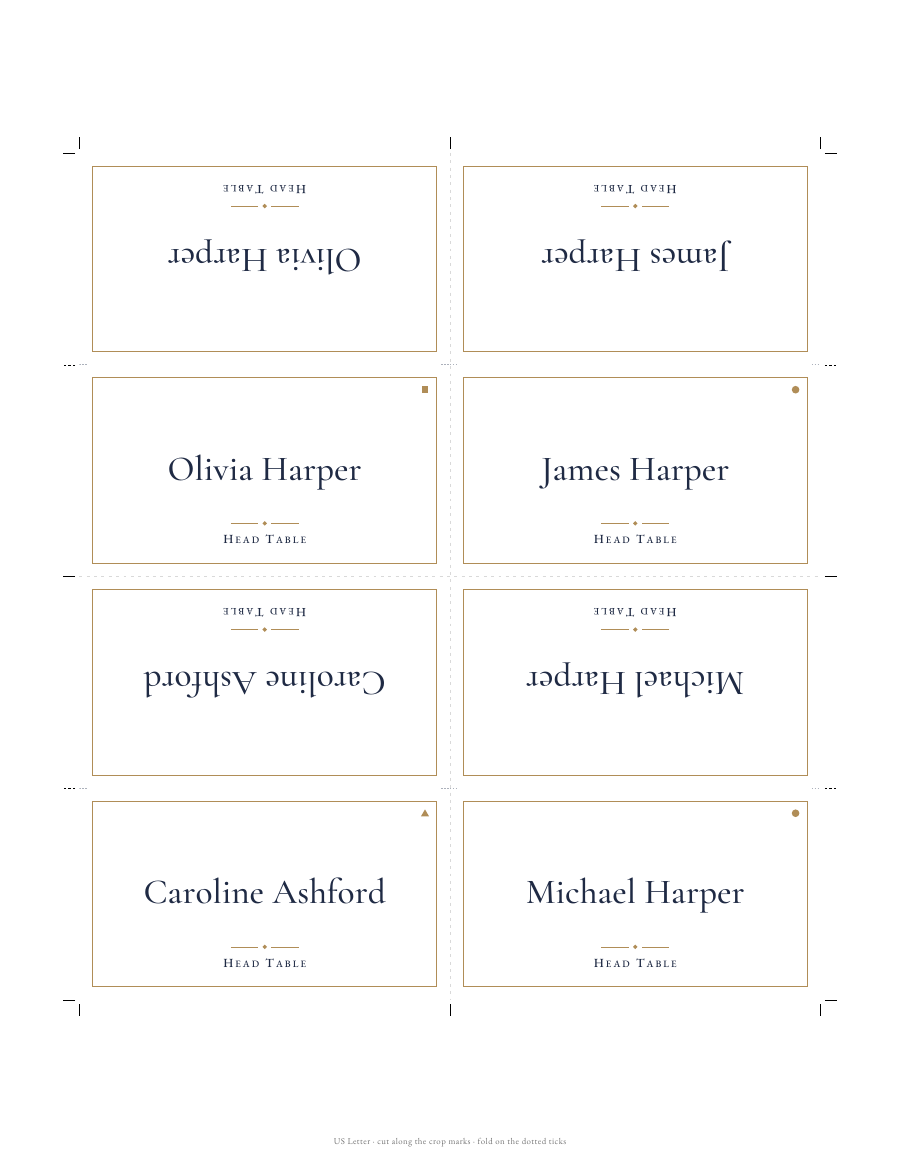
What makes these place cards different
- Filled from your plan. Change a seat and the card changes. Long names shrink to fit or wrap neatly instead of running off the edge.
- Printer-friendly sheets. Four tent cards per Letter or A4 sheet, with crop marks and fold ticks that stay inside the area home printers can print.
- Print-shop files too. Switch to “Print shop” for one card per page with 1/8 in bleed and crop marks: exactly what professional printers ask for.
- Meal symbols for servers. An optional tiny mark per meal choice, decoded on the caterer sheet.
- Four designs. Classic, Modern, Botanical and Gilded, matching your seating chart and table cards.
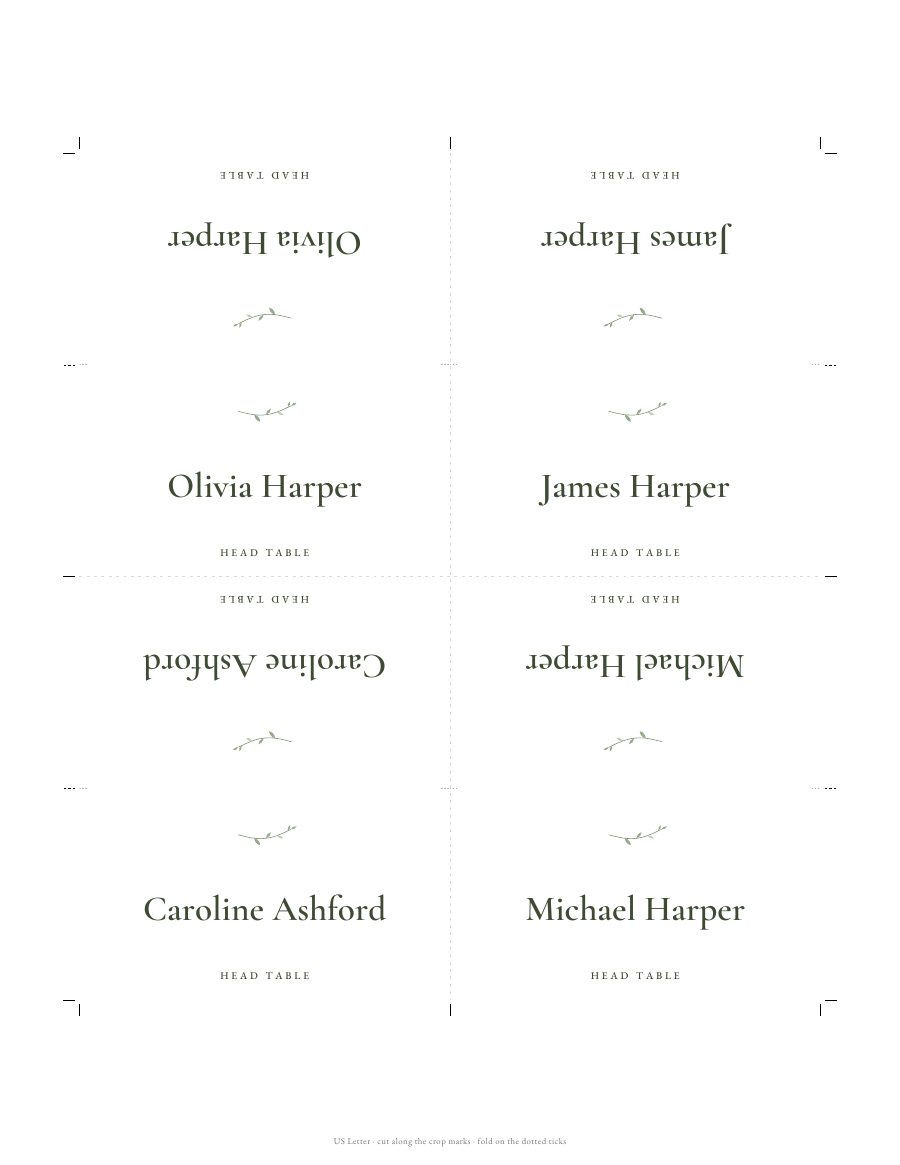
How to print and fold place cards at home
- Load card stock (250–300 gsm / 90–110 lb cover) into the manual feed.
- Print a test page on plain paper at 100% / Actual size and check a card measures 3.5 in (or 90 mm) wide.
- Print the sheets, and let inkjet prints dry for ten minutes.
- Cut along the crop marks with a metal ruler and craft knife, or a paper trimmer.
- Score the fold line lightly with the back of a butter knife against the ruler, then fold.
Do you need place cards at all?
Assigned seats (place cards) are traditional at formal dinners and helpful when meals are pre-ordered, since servers can match plates to seats. Assigning only tables (escort cards or a seating chart) is more relaxed and less work. Our etiquette guide covers both.
Place cards are part of Pro, a one-time payment that also unlocks escort cards, table cards and the caterer sheet.
Updated November 29, 2026